How to Choose a Hair Transplant Clinic in Korea: 4 Popular Seoul Options
Hair loss, a receding hairline, and thinning at the crown are common concerns for many people today. When medical treatment alone does not meet a patient’s needs, some may consider hair transplantation, which redistributes healthy follicles from the donor area at the back of the scalp.
Korea has a well-established hair transplant sector, and many hair restoration clinics are concentrated in Seoul’s Gangnam area. However, online descriptions such as “locally approved” are not formal medical ratings, and a clinic’s popularity does not mean that every patient will achieve the same outcome. The following overview introduces four Korean hair transplant clinics that are frequently searched by international patients and highlights the points worth comparing before making a decision.
1. MOJELIM Hair Transplant Clinic
Established in 1997, MOJELIM is one of Korea’s earlier medical providers focused on hair transplantation. It is located in Gangnam, Seoul, and its services include hairline correction, M-shaped temple restoration, crown density improvement, female hairline transplantation, and transplantation into scarred areas.
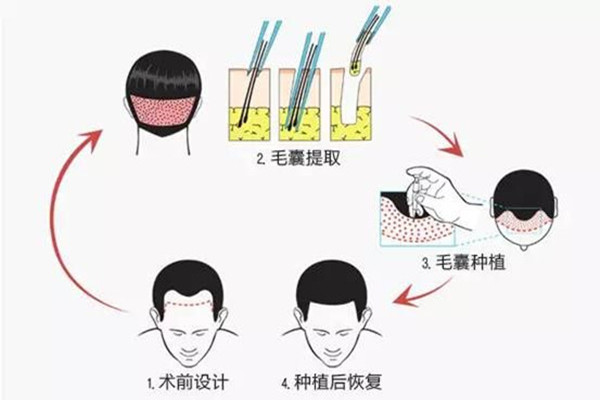
The clinic may assess either follicular unit transplantation using a strip method or follicular unit extraction without a linear incision, depending on the condition of the donor area, the extent of hair loss, and the patient’s preferences regarding scarring and recovery. Male hair restoration often places greater emphasis on the direction of the hairline, temple transitions, and the likely progression of future hair loss. Female hairline design may focus more on facial proportions, soft single-hair transitions, and the shape of the sideburn area.
2. THE BLACK Hair Transplant Clinic
THE BLACK is another hair restoration brand that receives attention in Seoul. Its services include incisional and non-incisional hair transplantation, hairline correction, crown restoration, and related hair loss treatment. Before surgery, the medical team generally needs to evaluate scalp condition, hair caliber, follicular density, and the available donor supply before estimating the number of grafts required for the treatment area.
A hair transplant should not be judged only by the number of follicular units. The front edge of the hairline usually requires finer single-hair grafts to create a natural transition, while the area behind it must balance density with the correct growth direction. Choosing a plan only because it is inexpensive or promises a large number of grafts may overlook donor-area preservation and could reduce the options available for another procedure in the future.
3. THE M Plastic Surgery Hair Transplant Center
THE M Plastic Surgery Hair Transplant Center is located in the Gangnam area of Seoul. Its service scope includes hairline correction, crown density restoration, and transplantation into scarred areas. A multidisciplinary or plastic-surgery-based center may consider facial contours, forehead proportions, and hairline design together. Even so, patients should first confirm whether their hair loss is relatively stable and whether the donor area contains enough usable follicles.
International patients should compare more than the surgical technique. It is also important to confirm whether the clinic offers communication in English or Chinese, remote preliminary assessments, clear preoperative instructions, and follow-up support after the patient returns home. An interpreter can assist with communication, but the operating doctor should personally explain the hairline design, donor extraction area, surgical plan, and potential risks.
4. MOMO Hair Transplant Clinic
MOMO focuses on hair transplantation, hair loss treatment, and scalp management. It may evaluate concerns such as a receding hairline, crown thinning, and localized areas of missing hair. Hairline restoration involves more than setting the height of the frontal line. The design also needs to connect the temples, sideburns, and lateral contours in a balanced way.
A hairline that is excessively straight or has completely uniform density can appear artificial. Planning should therefore consider the thickness, curl, growth direction, and natural distribution of the patient’s existing hair, along with overall facial proportions. It is also important to understand that transplantation redistributes existing follicles; it does not create new ones. If the native hair continues to thin, evaluation of the underlying cause and ongoing maintenance treatment may still be necessary.
How Should You Choose a Hair Transplant Clinic in Korea?
Confirm the Cause of Hair Loss First
Androgenetic alopecia, alopecia areata, telogen effluvium, scalp inflammation, and endocrine-related hair loss require different approaches. If shedding is still progressing rapidly, a dermatology or hair-loss evaluation should come before plans for surgery.
Check the Operating Doctor and Division of Responsibilities
During the consultation, ask who will design the hairline, extract the follicles, create the recipient sites, and place the grafts. Confirm that the medically critical parts of the procedure will be performed by a properly qualified doctor.
Do Not Compare Graft Numbers Alone
The same number of grafts can produce different visual results depending on hair thickness, donor density, implantation angle, and the size of the coverage area. Preserving a reasonable donor reserve is generally more important than pursuing the largest possible extraction in a single session.
Review Complete Recovery Cases
Compare preoperative images, photographs from several stages of recovery, and pictures of the donor area. Do not rely only on a single polished result image, as lighting, camera angle, and styling products can all change the appearance of density.
Plan Cross-Border Follow-Up in Advance
Before traveling to Korea, confirm the recommended length of stay, washing and suture-removal arrangements, postoperative medication, emergency contact procedures, and who will provide follow-up after the patient returns home.
Conclusion
MOJELIM, THE BLACK, THE M, and MOMO each have a different service focus. Rather than relying only on a “Korean hair transplant ranking” or claims that a clinic is widely recommended by local residents, patients should compare the operating doctor’s experience, donor-area planning, hairline design, surgical responsibilities, and postoperative follow-up.
Hair transplantation is a medical procedure and may involve swelling, bleeding, infection, temporary shedding, scarring, or growth that does not meet expectations. Clinic information and doctor schedules may also change, so patients should confirm current details directly with the provider and verify relevant medical credentials before booking. Treatment plans and outcomes vary between individuals, and the final decision should be based on an in-person medical consultation.