Is REDI Dermatology in Korea Worth Visiting? Meet Its Three Medical Directors and Explore Treatments for Skin Lifting, Facial Contouring, Acne Scars, and Pigmentation
When considering skin treatments in Korea, the most important questions go beyond treatment names and prices. What really matters is whether the doctor can accurately assess your skin, facial structure, and treatment priorities. Located in Seocho-gu, Seoul, REDI Dermatology focuses on personalized assessment and offers tailored options for skin tightening, facial contouring, skin boosters, enlarged pores, acne scars, pigmentation, facial redness, and acne.
Care is provided by three medical directors: Dr. Pil-hoon Kim, Dr. Soo-jin Park, and Dr. Jeong-eun Shin. Their backgrounds cover laser and aesthetic medicine, detailed injectable techniques, full-face design, and international patient care. This multidisciplinary approach helps patients move beyond simply following popular procedures and instead identify treatments that better match their individual concerns.
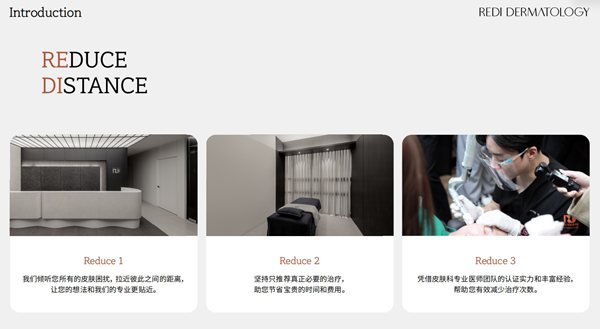
REDI Dermatology Focuses on Reducing the Distance Between Your Skin and Your Goals
REDI’s “REDUCE DISTANCE” philosophy begins with listening carefully to each patient’s concerns and determining which treatments are genuinely necessary. This is particularly important for first-time medical tourists. Facial laxity, for example, may involve skin thickness, fat distribution, the fascial layer, or facial muscles. Acne scarring may include ice-pick scars, tethered depressions, enlarged pores, and post-acne pigmentation at the same time.
Rather than relying on a single device for every concern, the clinic considers sex, age, skin thickness, lifestyle, and acceptable downtime. For international patients with limited time in Korea, this can help prioritize the areas that matter most and avoid unnecessarily stacking multiple procedures.
Three Medical Directors with Different Areas of Focus
Dr. Pil-hoon Kim, Medical Director, graduated from the Kyung Hee University Graduate School of Medicine and served as director of The Red Dermatology from 2020 to 2025. He is a full member of several professional organizations, including the Korean Society for Aesthetic Plastic Surgery and Laser Medicine, the Korean Society for Laser Dermatology and Trichology, the Korean Filler Society, and the Korean Academy of Anti-Aging Medicine.
His background spans laser treatments, hair and skin concerns, aesthetic medicine, fillers, and anti-aging care. He may be a suitable consultation choice for patients who want to organize several concerns at once. Someone dealing with uneven skin tone, enlarged pores, fine lines, and facial laxity, for example, can first clarify treatment priorities before deciding whether an energy-based procedure, injectable plan, or combination approach is more appropriate.
Dr. Soo-jin Park, Medical Director, graduated from Konyang University and previously served as vice director at Lienjang and education director at VANS Clinic. She completed the Radiesse MEX TTT trainer course and the Allergan Medical Institute MD Codes Masterclass. She has also served as a Healux i-Thread Key Doctor and KOL physician.
Her professional training is strongly associated with injectable design, contour refinement, and physician education. Patients concerned about nasolabial folds, hollow temples or cheeks, or uneven facial contours may discuss injection placement, dosage, and full-face balance with Dr. Park rather than simply adding volume to one isolated area. The clinic states that she has treated more than 500 medical professionals; individual suitability and treatment details still require an in-person assessment.
Dr. Jeong-eun Shin, Medical Director and Board-Certified Family Medicine Specialist, graduated from Yonsei University College of Medicine. She completed her internship and residency at Samsung Medical Center, where she also worked as a specialist and clinical assistant professor at the International Health Services Center. She additionally completed an elective program at Yale School of Medicine.
Her specialist training and international care experience may be particularly valuable for overseas patients who want to discuss facial proportions, medical history, and treatment expectations in detail. Patients with previous injectable treatments, facial asymmetry, or a combination of contour and skin-quality concerns should bring prior treatment records so the doctor can better evaluate which areas should be addressed at the current stage.
Skin Lifting Is Not a One-Device Treatment
REDI Dermatology offers several nonsurgical tightening and contouring technologies, including Ultherapy Prime, Density, Sofwave, Onda, Tune Face, Emface, V-RO Advance, and Oligio. These devices use different forms of energy and target different tissue depths. A more expensive procedure or a higher number of shots is not automatically the better choice.
- Ultherapy Prime: Uses focused ultrasound to target deeper tissue layers and may be considered for jawline definition and facial laxity.
- Density and Oligio: Radiofrequency-based tightening options that may be planned for skin elasticity and fine lines.
- Sofwave: Delivers ultrasound energy at a specific depth for fine lines and tightening, with an integrated cooling system.
- Emface: Combines radiofrequency with muscle stimulation, allowing facial contour concerns to be assessed from both skin and muscle perspectives.
- Onda: Uses microwave energy. Treatment areas and energy settings should be selected according to fat thickness and skin condition.
Patients with a slim face, thin skin, or existing volume loss should not simply copy another person’s shot count. The doctor should first identify the source of laxity so that efforts to tighten the face do not worsen hollowness or disrupt facial proportions.
From Skin Boosters to Natural-Looking Facial Contouring
For skin quality and facial contouring, the clinic offers assessments for Juvelook, Juvelook Volume, Radiesse, Rejuran Healer, hyaluronic acid fillers, skin Botox, and exosome treatments. Although these options are often grouped together as skin-improvement procedures, their purposes are not identical.
Juvelook may be delivered with systems such as DermaShine Pro, Potenza microneedling RF, Mirajet, or Double Tite, depending on concerns such as pores, fine lines, acne scars, or uneven texture. Juvelook Volume and Radiesse are more closely related to volume, contouring, and collagen-stimulation strategies. When treating hollow areas, the doctors consider bone structure, facial symmetry, and movement to avoid creating an overfilled or unnatural appearance.
Injectable treatments may still cause swelling, bruising, tenderness, asymmetry, or other complications. Each product has its own contraindications and recovery considerations. Patients who have previously received fillers, thread lifts, or facial surgery should disclose the product used, treatment date, and injection location before proceeding.
Layered Treatment Options for Pores, Acne Scars, Pigmentation, and Redness
Acne-scar and pore treatment at REDI Dermatology does not depend on a single laser. Available approaches include UltraClear, Ultrapulse Encore, Potenza, Mirajet, fractional picosecond laser, Double Tite, Legato, TCA CROSS, and subcision.
Ice-pick scars may be assessed for TCA CROSS, while depressed scars tethered by fibrous tissue may require evaluation for subcision. If enlarged pores, rough texture, or inflammation are also present, microneedling radiofrequency or another energy-based treatment may be incorporated. Ablative procedures often involve more visible downtime and can cause redness, crusting, post-inflammatory pigmentation, or infection. Treatment planning should account for skin tone, scar type, and the patient’s return-to-work schedule.
For redness and vascular concerns, the clinic uses Vbeam Perfecta and may combine it with Potenza or calming care when appropriate. Pigmentation options include Pico Toning, Helios IV, LDM, Ionzyme, and Cryocell. Melasma, freckles, acne marks, and vascular redness require different treatment strategies; simply requesting a popular “pico laser” may not produce the right energy settings or treatment schedule.
More Convenient Consultations for International Patients
REDI Dermatology is located at the 4th and 5th floors of DM Tower Building 2, 105 Bangbae-ro, Seocho-gu, Seoul, South Korea, near Bangbae Station. The clinic provides real-time online consultation and has staff who can assist in English, Chinese, and Japanese. This makes it easier for international patients to discuss treatment goals, required appointment time, and aftercare before traveling.
Opening hours are 10:00 a.m. to 8:00 p.m. on Monday, Wednesday, and Friday; 10:00 a.m. to 7:00 p.m. on Tuesday and Thursday; and 10:00 a.m. to 3:00 p.m. on Saturday. The weekday lunch break is from 1:00 p.m. to 2:00 p.m., while the clinic operates without a lunch break on Saturday. Doctor schedules, treatment hours, and closure dates may change, so patients should reconfirm them when booking.
Who May Want to Include REDI Dermatology on Their Seoul Consultation List?
- Patients with a combination of laxity, volume loss, and skin-quality concerns who want a doctor to prioritize treatment steps.
- Patients who value full-face balance and want to preserve natural expression after injectable treatment.
- Patients with multiple types of acne scars, enlarged pores, or post-acne marks who need a combined assessment.
- Patients dealing with pigmentation, facial redness, or recurring acne who do not want to choose solely by trending procedure names.
- International patients seeking Chinese-language assistance and online consultation before traveling to Korea.
What to Prepare Before Booking
Patients can prepare makeup-free front and side photographs, records of previous procedures, a list of current medications, and their planned length of stay in Korea. Those considering injections should disclose previously used products and treatment areas. Patients considering acne-scar laser treatment should allow time for redness, crusting, or changes in skin tone.
REDI Dermatology’s appeal lies not only in its broad treatment selection, but also in its combination of three medical directors with different clinical backgrounds and a range of energy-based and injectable options. This helps patients shift from asking “Which popular procedure should I book?” to “Which approach actually matches my condition?” During consultation, patients can begin with their two or three main concerns and allow the doctor to determine the treatment, energy level, dosage, and sequence. Final costs should be confirmed after examination and receipt of a complete treatment plan.