How to Choose a Face Lift Hospital in Korea: 6 Seoul Gangnam Hospitals and Price Guide
When body weight has not changed significantly but nasolabial folds, jowls, and a less defined jawline become more noticeable, the cause may involve reduced skin elasticity, displaced facial fat pads, and laxity in deeper supporting tissues. When planning facial lifting treatment in Korea, the key is not simply choosing a popular procedure. It is important to identify the location and depth of the laxity before comparing energy-based tightening, thread lifting, limited-incision lifting, or facelift surgery. This guide summarizes the publicly presented service directions of Luho, ROSE, Edition, Bonyeon, MULY, and Dream Plastic Surgery, together with market price ranges for initial comparison.
How Are Facial Lifting Methods Different?
Mild laxity may be assessed for ultrasound, radiofrequency, or thread lifting. Moderate jowls and downward movement of the facial contour may lead to a comparison between limited-incision and lower-face lifting procedures. When neck laxity and deeper tissue displacement are also present, the doctor may assess the SMAS layer and possible neck treatment. Some people also have hollow temples, reduced cheek volume, or localized fat accumulation, so fat grafting or limited liposuction may be discussed. A larger number of procedures does not automatically make a plan more appropriate; the selection should depend on the individual’s facial condition.
Luho Plastic Surgery: Natural Contours and Multiple Treatment Approaches
Luho offers consultations for facelift surgery, limited-incision lifting, thread lifting, and energy-based procedures. It may suit people who want to address lower-face laxity while preserving facial harmony and their existing identity. During consultation, ask about incision placement, treatment depth, the direction of tension, and follow-up arrangements. The identity of the doctor who will perform the operation should also be confirmed.
ROSE Plastic Surgery: From Non-Incisional Care to Facelift Surgery
ROSE offers thread lifting, limited-incision procedures, open facelift surgery, and energy-based options. It may suit people who want to compare different levels of intervention at one hospital. The assessment should distinguish whether the main issue comes from loose skin, fat displacement, or changes in deeper support before deciding whether the SMAS layer needs to be addressed. Review pre- and post-procedure materials from people with a similar age and degree of laxity rather than relying only on photographs taken under very different conditions.
Edition Plastic Surgery: Lower-Face and Jawline Planning
Edition may be included when comparing lower-face lifting, jowl correction, and jawline contour planning. For some people, the main concern is downward movement of cheek fat, while others also have reduced skin elasticity or laxity of the platysma. In addition to asking how much lifting may be achieved, discuss which anatomical layers the doctor intends to treat, whether the procedure should extend to the neck, and how a limited-incision method differs from a conventional facelift.
Bonyeon Plastic Surgery: Preserving Individual Features Through Area-Based Design
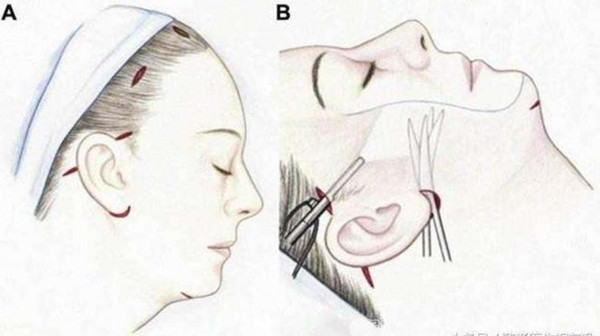
Bonyeon may appeal to people who prefer a natural adjustment and want to preserve their individual facial features. Those with little facial fat and thin skin need careful planning of the direction of tension so the face does not look overly tight. People with more facial fat may need to discuss localized fat management. When comparing plans, do not look only at incision length. Ask about incision placement around the front and back of the ears, the hairline, and the recommended scar-care routine.
MULY Plastic Surgery: Assessing Localized Laxity and Surgical Scope
MULY can be considered for localized facial lifting concerns such as midface descent, lines near the corners of the mouth, or a less distinct jawline. A smaller surgical area does not necessarily mean a shorter healing period, and it may not be suitable for significant deep-tissue laxity. During consultation, ask which layer a localized procedure can address, its expected limitations and duration, and whether shortening the incision could affect tissue fixation.
Dream Plastic Surgery: Combined Facial Rejuvenation Assessment
Dream Plastic Surgery offers consultations for facial lifting and broader facial rejuvenation planning. It may suit people who have laxity together with volume loss or an indistinct contour. If the doctor suggests combining fat grafting, localized liposuction, or another contour procedure, confirm the purpose, sequence, and cost of each component instead of viewing several procedures as a fixed package.
Reference Prices for Facial Lifting in Korea
Common initial market quotations include approximately KRW 1–5 million for ultrasound or radiofrequency tightening, equivalent to about CNY 5,000–27,000; KRW 2–8 million for thread lifting, about CNY 11,000–43,000; KRW 5–15 million for a localized limited-incision lift, about CNY 27,000–80,000; and KRW 12–30 million for a lower-face facelift, about CNY 64,000–160,000. A deep-plane full facelift may start at around KRW 20–45 million, while a full facelift combined with a neck lift may start at around KRW 25–50 million. These figures are budgeting references rather than fixed quotations from the six hospitals. Exchange rates, the doctor, surgical extent, anesthesia, and inpatient arrangements can all change the final amount.
When requesting a quotation, confirm whether it includes preoperative tests, imaging assessment, anesthesia and operating-room charges, consumables, medication, dressing changes, swelling care, interpretation, and remote follow-up. Accommodation and transportation usually require separate confirmation. A low online price may cover only one area or the basic surgical fee, so request a complete itemized quotation before making payment.
What Should Be Checked When Choosing a Hospital?
Compare plans proposed by two or three doctors and note whether their explanations of the cause of laxity, surgical layers, and incision design are consistent. Confirm whether the consulting doctor and operating doctor are the same person, and verify the relevant professional registration information. Before surgery, disclose allergies, chronic conditions, pregnancy or breastfeeding status, and the use of blood-thinning medication or supplements.
Facelift and limited-incision procedures may involve swelling, bruising, scarring, altered sensation, asymmetry, and an extended healing period. Luho, ROSE, Edition, Bonyeon, MULY, and Dream offer different consultation directions, but there is no single plan suitable for everyone. Rather than comparing advertising visibility, focus on whether the doctor can clearly explain the cause of tissue laxity, the intended treatment area, possible risks, and the complete cost. The final plan should follow an in-person assessment and the hospital’s current quotation.