How Much Does Eye Revision Surgery at Semy Plastic Surgery in Korea Cost? A Practical Price Guide
When people start thinking about traveling to Korea for eye revision surgery—adjusting a previous double-eyelid or eye-shape procedure—the practical question is almost always about budget. If a specific clinic such as Semy Plastic Surgery (often searched in connection with eye revision) is already on your list, price becomes the focal point. Beyond a market price range, this guide breaks down what actually drives the cost, so you can plan with realistic expectations.

What is eye revision surgery, and why is it more demanding than a first procedure?
Eye revision refers to correcting a previous eyelid or eye-shape operation whose result is not ideal—common cases include creases that are too wide or too narrow, noticeable asymmetry, visible scarring, a heavy drooping look, or a gap when the eyes are closed. Compared with a primary procedure, revision works inside existing tissue and scar layers, which asks more of the surgeon’s judgment and technique. That is also why it is generally placed in the more complex category.
Where do eye revision prices in Korea generally fall?
To answer “how much” directly: in Korea, eye revision typically sits well above a first-time double-eyelid procedure. Based on commonly cited market ranges, the figure moves with difficulty and looks roughly like this (in Korean won, with approximate USD as a budgeting hint—exchange rates move):
| Type of revision | Korean won (approx.) | Approx. USD |
|---|---|---|
| Simple crease revision (width, symmetry) | ₩3,000,000–₩6,000,000 | about $2,200–$4,500 |
| Moderate revision (adhesion release, fat work) | ₩4,000,000–₩8,000,000 | about $3,000–$6,000 |
| Complex revision (with ptosis correction, tissue rebuild) | ₩6,000,000–₩12,000,000+ | about $4,500–$9,000+ |
For clinics frequently asked about—Semy among them—what is publicly visible tends to be a starting price or a range; the final quote still depends on your eyelid baseline and the goal you want to reach, confirmed at an in-person assessment. So instead of fixating on one number, it helps to understand the factors below.
Four core factors that move the price
The first is surgical difficulty: simply narrowing a crease is a different task from dealing with incomplete closure, severe adhesion, or tissue loss. The second is the surgeon and team: different doctors have different practice positioning, and quotes reflect that. The third is technique choice: whether fat needs to be removed, whether fascial or tissue reconstruction is required, and whether ptosis correction is combined all change the cost structure. The fourth is location and clinic scale: consultations in Seoul’s main medical-beauty districts and smaller local clinics do not price by the same logic.
Why revision usually costs more than a primary procedure
A primary surgery is performed on relatively straightforward tissue, with controllable steps and risk. Revision first has to address old injury and scarring, release adhesions, assess how much tissue remains, and then plan the new approach. The process takes longer and relies more on experienced judgment, so the fee structure carries higher technique and time cost. For the patient, understanding why it costs more matters more than comparing prices in isolation.
Hidden costs beyond the surgery fee
The surgical fee is one part of the budget. Round-trip flights and accommodation, post-op follow-ups and care supplies, swelling management when needed, and a block of unscheduled rest time should all be counted. Coming from overseas, also budget for translation support and local transport. Once totaled, the real budget is often well above the surgery fee alone; listing these early prevents surprises later.
How to tell whether your budget is enough
A practical method: set a “surgery fee ceiling,” then reserve an extra thirty to fifty percent of flexibility for the hidden costs above and possible secondary adjustment. If the budget is tight, focus on “solving the concern that bothers you most” rather than achieving perfection in one go; discuss priorities with the surgeon so resources go to the key points. Budget is not “the higher the better”—it should match your expectations and risk tolerance.
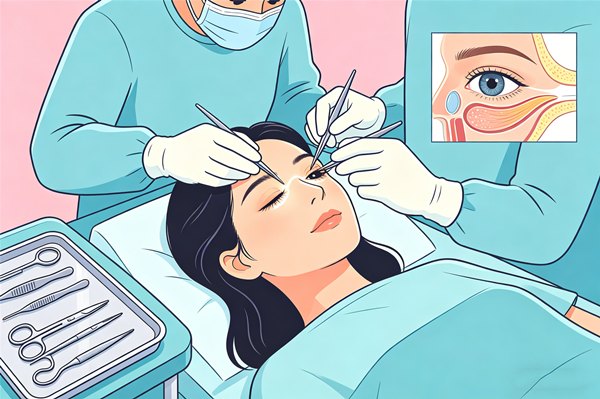
Price details to clarify during a consultation
At consultation, confirm in person whether the quote includes anesthesia and post-op medication, whether stitch removal and follow-ups are covered, how a needed secondary adjustment is charged, and whether any items are bundled with the surgery. Writing these into a confirmation sheet reduces later misunderstanding. Also clarify the payment method and deposit rules, so you understand what each charge corresponds to.
Common misconceptions about price
One misconception is that a low price means good value—an unusually low quote may skip necessary assessment steps. Another is that a high price equals better outcome—fees are shaped by positioning, location, and marketing cost, not strictly by result. A third is treating a number found online as your own quote: everyone’s eyelid baseline differs, so others’ prices work as a range reference, not your plan. Placing price inside the overall plan leads to a sounder decision.
How the visit timeline shapes your total cost
Eye revision often needs more than a single short appointment. Swelling after surgery can take weeks to settle, and many people choose to stay in Korea for the early recovery so the clinic can monitor healing. That stay lengthens accommodation and living costs; alternatively, some return home and come back for a follow-up, which adds another flight. Deciding between one longer stay and two shorter trips changes the hidden-cost math, so it is worth raising the expected recovery window during consultation and planning the trip around it rather than around the surgery date alone.
What to prepare and ask beyond the price
Price is one column of the decision. Before the visit, gather clear photos of your eyes in different lighting, a short list of what bothers you most, and any records from the previous procedure if you have them. During the meeting, ask how the plan differs from a primary surgery in your case, what the realistic healing path looks like, and what would happen if the result still needs adjustment. Writing the answers down lets you compare two clinics on equal terms later, because you asked each the same questions and can line the replies up side by side.
Why two clinics can quote differently for a similar case
Even when two people describe a similar concern, quotes can still differ because each clinic weights factors differently. One may include more pre-surgical imaging and follow-up in the base fee; another may list those separately. A clinic with a narrower focus on eyelid work may price differently from a larger center that handles many procedure types. None of these differences automatically makes one better; they reflect how each practice bundles its service. Reading the quote line by line, not just the bottom number, is what keeps the comparison fair.
Setting a realistic expectation before you budget
A useful mindset is to treat the budget as a range with a ceiling, not a target. Eye revision outcomes depend on your own tissue response, which no quote can fully predict, so leaving room for the unexpected protects you from having to choose between skipping needed care and overspending. When the budget and the expectation are both realistic, the consultation becomes a planning conversation instead of a pressure moment, and you are more likely to leave with a plan you actually understand.
Putting price into the bigger plan
Returning to the question “how much does eye revision at Semy Plastic Surgery in Korea cost,” the honest answer is that there is no fixed number that fits everyone; it is shaped by your eye condition, technique choice, and clinic positioning. Rather than searching for a single quote repeatedly, bring a clear budget range and your expectations, meet a suitable surgeon for an in-person assessment, and let both the plan and the cost land within a range you are comfortable with.